

Chinese classical gardens, also known as traditional Chinese gardens, boast a history of more than 2,000 years. From the imperial gardens of the Qin and Han dynasties, to the elegant retreats of scholars in the Wei and Jin dynasties, and to their full prosperity in the Ming and Qing dynasties, they have always embodied the spiritual pursuits of the Chinese people.
Unlike Western gardens, which emphasize symmetry, order and openness, Chinese classical gardens take "modeling after nature, harmony between man and nature" as their core principle. Without excessive artificial carving, they reveal the authenticity and vitality of nature everywhere, as if bringing a flowing traditional Chinese landscape painting into reality. Here, there are no uniformly trimmed plants or deliberately symmetrical layouts, only a natural blend of rockeries, flowing water, plants and pavilions, allowing people to find peace amid hustle and bustle, and to perceive the vastness of heaven and earth within a small space.
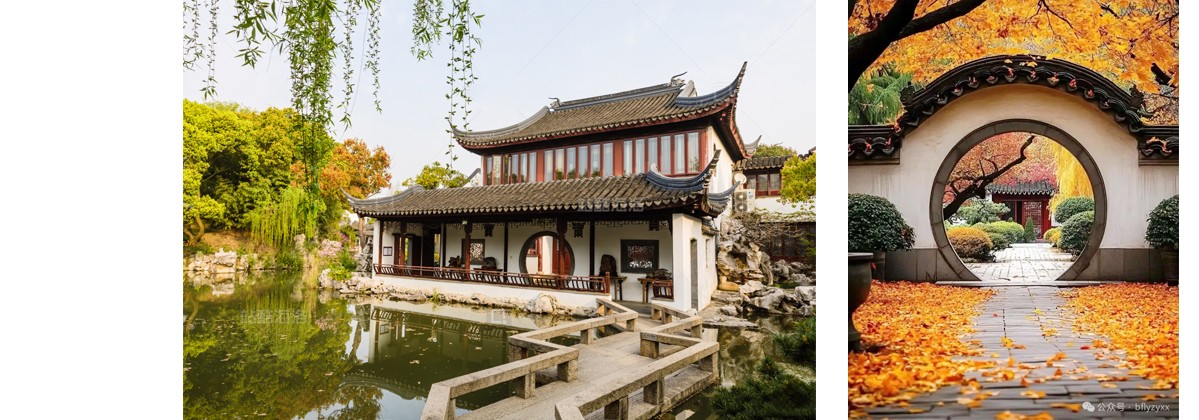
Rocks are the soul of Chinese classical gardens. Artisans select natural exotic stones: some are stacked into steep rockeries, others arranged as elegant single stones. Some resemble layered mountain ranges, while others look like birds and beasts at play. With little embellishment, they naturally exude the aura of mountains and rivers. These rocks are not just landscape ornaments; they also embody the Chinese people’s reverence and love for nature. As the ancients described:"Mountains have three kinds of depth: looking up to the peak from the foot is high distance; peering behind the mountain from the front is deep distance; viewing distant mountains from near ones is level distance."The rocks in Chinese gardens perfectly present the beauty of these "three distances".
Flowing water is the lifeblood of Chinese classical gardens. The water in gardens never pursues grandeur; instead, it winds and gurgles gently throughout the grounds. Some streams trickle down from rockeries as small waterfalls; others flow slowly around pavilions and terraces, nourishing the plants on the banks. Some gather into small ponds dotted with lotus leaves, where fish and shrimp swim freely, framed by weeping willows on the shore. When the breeze blows, the water sparkles, fully displaying the grace and vitality of the Jiangnan water towns. The liveliness of flowing water animates the entire garden and symbolizes the Chinese longing for constant vitality and endless growth.
Plants are the clothing of Chinese classical gardens. The planting design does not chase rare or expensive species, but focuses on "scenery and charm in all four seasons": peach and apricot blossoms bloom in spring; lotus flowers stand gracefully in summer; osmanthus and maple leaves adorn autumn; while plum blossoms and green bamboos stand tall in winter. Pine, bamboo and plum, known as the "Three Friends of Winter", are the most common plants in these gardens. They not only symbolize perseverance and nobility, but also carry the spiritual ideals of the Chinese. Lotus, orchid and chrysanthemum represent purity and elegance, adding poetry and refinement to the scenery.
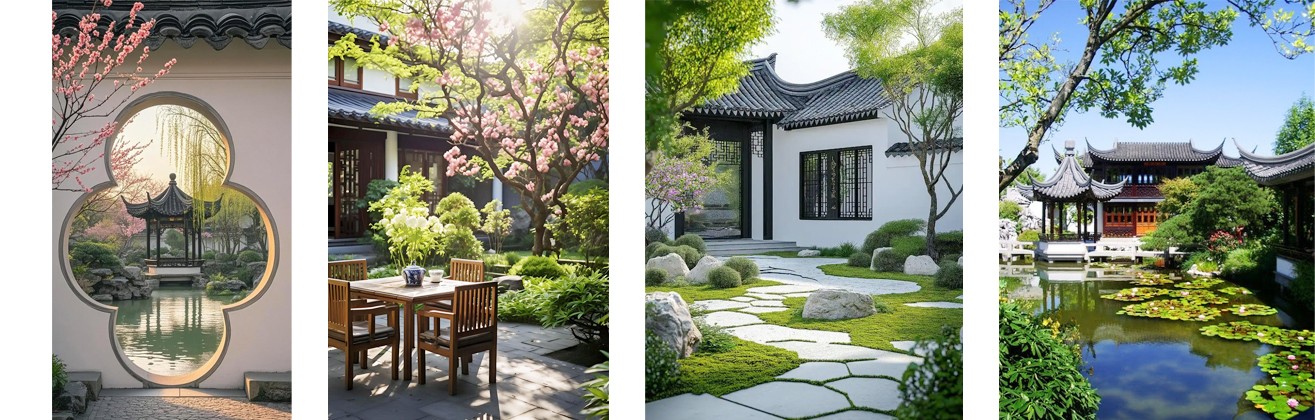
As early as ancient times, the philosophy of Chinese garden design spread abroad via the Silk Road, influencing landscape architecture in Japan, Korea and other countries. Today, more and more foreigners come to China to visit classical gardens and experience the charm of Oriental aesthetics. Many elements of Chinese gardens have also been adopted in overseas landscape design, helping more people understand and appreciate Chinese culture.
Chinese classical gardens are artistic treasures forged over thousands of years, a vivid expression of Oriental living aesthetics, and a shared cultural heritage of humanity. They hold the grace of mountains and rivers, the romance of poetry, and the wisdom of the East, waiting for everyone who loves beauty to discover, experience and understand. We believe that once you step into a Chinese classical garden, you will be captivated by its charm, and come to love this poetic and warm Eastern land, as well as its profound and extensive culture.