

China is the homeland of tea and the birthplace of tea culture, with a history of more than 4,700 years of tea cultivation and processing. As early as the era of Shennong, the legendary ruler, there existed the tale that “Shennong tasted hundreds of herbs and encountered seventy-two poisons in a single day, only to be cured by tea.” This marked the beginning of tea’s bond with the Chinese people.
From its use as medicine in the pre-Qin period, to a refined pastime of scholars and literati in the Wei and Jin dynasties, to the flourishing of tea culture in the Tang and Song dynasties, and finally to its integration into ordinary households during the Ming and Qing dynasties, tea has long taken deep root in China’s history and daily life, becoming an indispensable part of being Chinese.
Unlike overseas tea bags and flavored teas, Chinese tea emphasizes authentic flavor and artistic conception. Every step, from picking and processing to brewing and tasting, embodies Oriental aesthetics and craftsmanship — the very charm that allows it to cross borders and captivate the world.
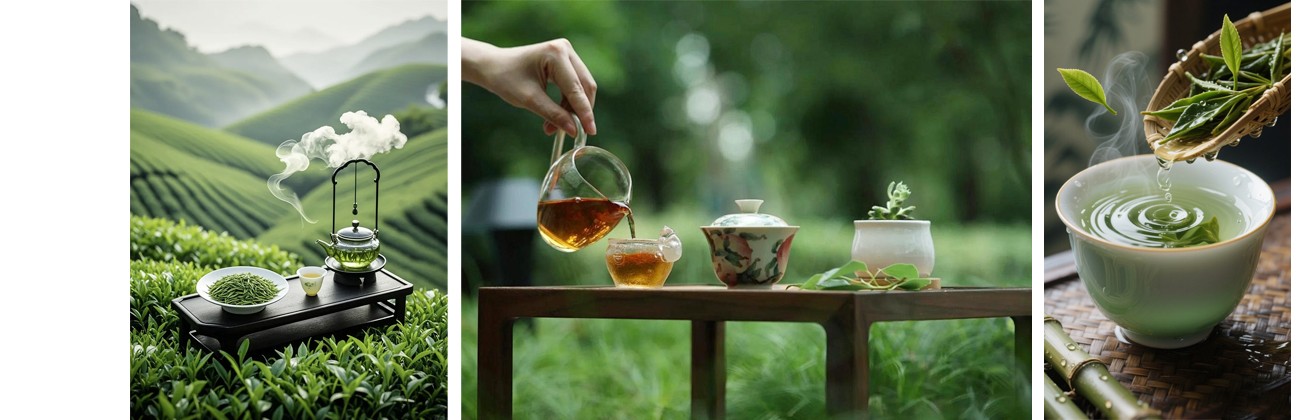
Green tea is one of the most representative categories of Chinese tea and also a favorite among foreigners. Unfermented and freshly processed, it retains the original freshness and emerald color of the tea leaves. Its taste is sweet and refreshing with a lingering aftertaste, as if capturing the very breath of spring. West Lake Longjing, Biluochun, and Huangshan Maofeng are among its finest treasures.West Lake Longjing, grown around Hangzhou’s West Lake, features a clear, high aroma and a fresh, brisk taste. It is renowned for its four outstanding qualities: green hue, rich fragrance, sweet flavor, and elegant shape. Biluochun, produced in Suzhou, Jiangsu, has slender, tightly twisted leaves resembling snails. It carries a strong fragrance, a sweet entry, and a subtle floral and fruity note that lingers pleasingly on the palate.
Black tea is the most approachable category of Chinese tea. Fully fermented, it boasts a bright reddish liquor and a mild, mellow taste. Free of the slight astringency of green tea, it offers a gentle, long-lasting sweetness, making it suitable for people of all ages. Keemun Black Tea and Lapsang Souchong stand out as elite varieties.Keemun Black Tea from Qimen, Anhui, possesses a unique aroma known as the “Keemun Fragrance”. With a rich taste and bright red infusion, it ranks among the world’s top three high-fragrance black teas. Lapsang Souchong, the earliest black tea in China, originates from Wuyi Mountain in Fujian. It has a full-bodied flavor with a light smoky pine aroma and is honored as the ancestor of all black teas.
Beyond green tea and black tea, China also boasts distinctive varieties such as oolong tea, white tea, and dark tea.Oolong tea is semi-fermented, falling between green and black tea. It combines the freshness of green tea with the mellowness of black tea. Representative types include Tieguanyin and Da Hong Pao, which release a rich, lingering fragrance and offer layered, complex tastes.White tea is lightly fermented with simple processing, preserving the natural essence of the leaves. It tastes fresh and sweet, improves with age, and is ideal for long-term storage.Dark tea is a post-fermented tea with a smooth, mellow taste and a unique aged aroma. Among them, Pu’er tea enjoys worldwide fame. Its flavor deepens over time, making it a highly sought-after collection for tea enthusiasts.
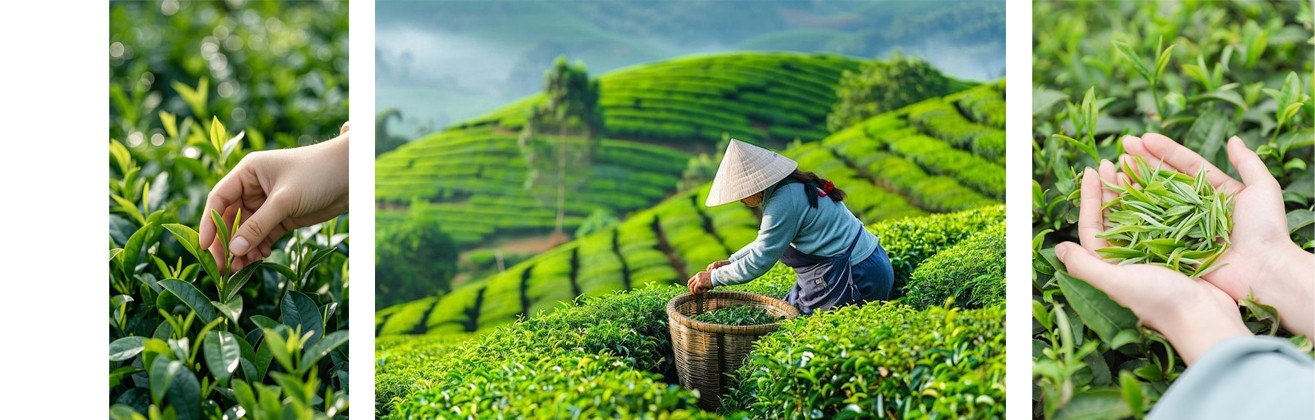
Tea embodies the Chinese philosophy of harmony between man and nature. In growing and processing tea, the Chinese always follow the rhythms of nature: harvesting in spring, nurturing in summer, storing in autumn and preserving in winter. There is no excessive interference with the tea’s growth, emphasizing harmonious coexistence between humanity and nature.This philosophy is reflected not only in tea making but also in the artistic conception of tea tasting. Sipping a cup of tea in a courtyard or by a window, watching leaves unfurl gently, listening to the wind and birdsong, and savoring the beauty of nature — this is the ideal way of life pursued by the Chinese, and the core essence of Oriental culture.
Tea also carries the literary spirit of China. Since ancient times, scholars and poets have formed an unbreakable bond with tea. Li Bai, Du Fu, Su Shi, and other great poets composed verses in praise of tea, weaving its elegance into their emotions and writings.“In a quiet mountain retreat I await the bright moon, offering a cup of pure tea to a bosom friend.”For scholars, tea is a medium to express feelings and uphold ideals, and a symbol of pursuing simplicity, tranquility, and spiritual elevation. This literary sentiment adds poetry and grace to Chinese tea, enriching the profound heritage of tea culture.
Chinese tea is a cultural treasure refined over thousands of years, a vivid expression of Oriental elegance, and a shared cultural heritage of humanity. It holds the grace of nature, the poetry of scholars, and the warmth of the Chinese people, waiting for all who love beauty to discover, taste, and understand.
We believe that when you hold a cup of Chinese tea, you will be drawn to its fragrance, touched by its charm, and come to love the extensive, profound, gentle, and elegant culture of China.